Source UV Germicidal Electronic Ballast for Water, Air, and Surface
Compare 21 UV germicidal electronic ballast options with varying power, voltage, and protection features. Buyers can evaluate specifications for water, air, and surface disinfection applications to find the right fit.
Key considerations
Products List


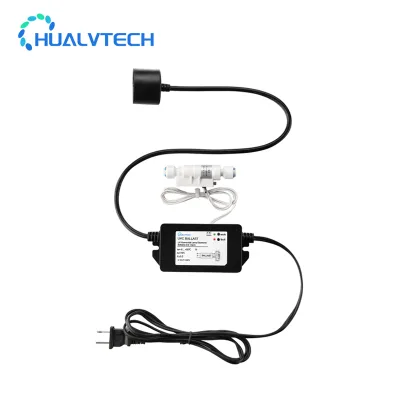
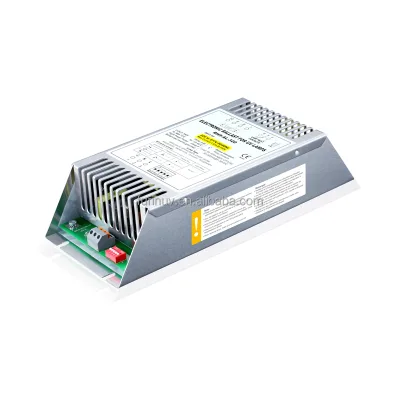
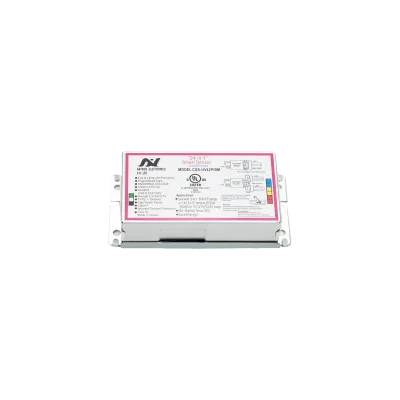
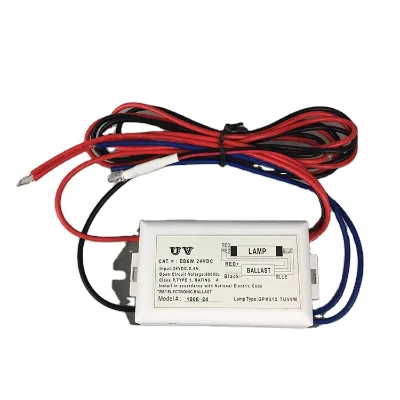
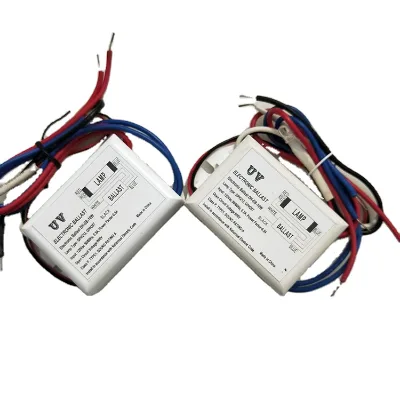
Comprehensive Sourcing Guide
Strategic Sourcing Guide for UV Germicidal Electronic Ballasts
Navigating the procurement of UV germicidal electronic ballasts requires a disciplined approach that prioritizes technical compatibility, regulatory compliance, and supply chain reliability. These components are critical for the operation of high-intensity discharge lamps and specific UV-C sterilization systems, where failure can compromise both safety and efficacy. The following guide synthesizes available market data and technical observations to assist procurement professionals in evaluating potential suppliers and selecting the appropriate hardware for their specific operational needs.
Technical Specifications and Performance Parameters
When sourcing electronic ballasts, the primary focus must be on matching the electrical characteristics of the ballast to the specific lamp requirements. The market offers a diverse range of models, each tailored to different power loads and lamp types. Buyers must verify that the selected unit supports the intended lamp configuration, whether it is a single high-wattage tube or a dual-lamp setup.
Data indicates that available units span a significant power range, with specific models supporting outputs between 200W and 320W, while others are designed for lower power applications ranging from 18W to 40W. The input voltage is another critical variable; some units are engineered for a fixed 230V input, whereas others offer a broader operational range of 110V to 240V, or specifically AC220-240V. This flexibility is essential for international deployments where grid standards vary.
The startup mechanism is a defining technical feature that influences lamp longevity and immediate performance. Two distinct modes are observed in current listings: Pre-Heat and Quick Start. Pre-Heat ballasts are generally preferred for High Intensity Discharge (HID) and High Pressure Sodium lamps, as they warm the electrodes before applying full voltage, reducing wear. Conversely, Quick Start modes are utilized in other configurations to ensure immediate ignition. The current draw also varies significantly by model, with observed ranges from 0.33A to 2.2A depending on the wattage and input voltage.
Efficiency and power factor are key metrics for energy-conscious procurement. High-performance units demonstrate power factors greater than 0.55 and efficiencies exceeding 90%. However, buyers must remain vigilant, as some models may list power factor compensation as "Active" while others indicate "Without," directly impacting the electrical load on the facility. The physical dimensions and weight of the ballast are also practical constraints; observed standard sizes range from compact units measuring 785144mm to larger industrial models at 24910857mm, with weights typically around 0.5kg for smaller variants.
Compliance and Certification Verification
In the UV and lighting sector, certification is not merely a formality but a prerequisite for market access and safety assurance. Procurement teams must rigorously verify that suppliers provide valid documentation for recognized standards. The most frequently cited certifications in the current market data include CE (Conformité Européenne) and CCC (China Compulsory Certification). Some listings also reference RoHS compliance, which restricts the use of specific hazardous materials in electrical and electronic equipment.
It is imperative to treat certification claims as observations that require validation rather than absolute guarantees for every listed product. Buyers should request specific test reports and certificate numbers from the supplier to confirm that the specific model number being purchased holds the stated certification. For instance, while a model might be listed with CE and CCC, the procurement process must ensure that the batch being delivered matches the certified specifications.
Environmental and safety standards also extend to the operational limits of the device. The ambient temperature range is a critical compliance factor for installation environments. Observed data suggests a standard operating range of -15°C to 40°C. Installing a ballast outside this range without additional environmental controls can lead to premature failure or safety hazards. Furthermore, the waterproof level, often cited as IP20 or IP64 in product descriptions, dictates the suitability of the ballast for different installation locations. An IP20 rating indicates protection against solid objects larger than 12.5mm but no protection against water, making it unsuitable for damp or outdoor environments. In contrast, an IP64 rating offers protection against dust and water splashes, which is necessary for specific germicidal applications where moisture may be present.
Cost Drivers and Pricing Dynamics
The pricing of UV germicidal electronic ballasts is influenced by a complex interplay of technical specifications, certification costs, and production volumes. The observed market price range spans from approximately $1.80 to $99.00 USD. This wide disparity is not arbitrary; it reflects differences in power capacity, build quality, and the inclusion of advanced features like active power factor compensation.
Lower-priced units typically correspond to lower wattage applications (e.g., 18W to 40W) and may lack advanced protection features or high-efficiency components. Conversely, high-wattage units (200W-320W) designed for industrial HID lamps command higher prices due to the robust internal components required to handle the increased electrical load and thermal stress. The presence of specific certifications, such as CCC for the Chinese market or CE for Europe, also adds to the cost structure, as these require rigorous testing and ongoing compliance audits.
Minimum Order Quantity (MOQ) is another significant cost driver. The market shows an MOQ range from 1 unit to 200 units. For small-scale projects or replacement needs, suppliers offering an MOQ of 1 are preferable, though the unit price may be higher. For large-scale deployments, negotiating an MOQ closer to 200 units can often secure a lower per-unit cost. Buyers should also consider the packaging type, which ranges from standard cartons to wooden crates. Wooden packaging is typically more expensive and is often required for heavy or sensitive industrial shipments, adding to the overall landed cost.
Typical Applications and Lamp Compatibility
Understanding the specific application environment is crucial for selecting the correct ballast. The data highlights that these ballasts are primarily designed for High Intensity Discharge (HID) and High Pressure Sodium lamps, as well as specific UV germicidal tubes. The load lamp configuration is a decisive factor; some models are optimized for a single lamp in the 95W to 150W range, while others support dual-lamp setups with individual wattages between 35W and 75W.
For UV germicidal applications, the ballast must provide a stable current to ensure the UV-C output remains consistent. Variations in lamp current, such as the observed 0.35A to 0.43A range for lower wattage units, must align with the specific requirements of the UV tube to prevent flickering or reduced sterilization efficacy. The lead length is another practical consideration; units with 3-meter leads offer greater flexibility in installation compared to those with 1.5-meter leads, potentially reducing the need for extension cables in tight or complex enclosures.
The physical size of the ballast must also fit within the designated housing or fixture. Compact models measuring 2006330mm are suitable for retrofitting into existing small fixtures, whereas larger units may require custom enclosures. The maximum operating temperature of 70°C is a critical limit for the internal components; in high-ambient environments, adequate ventilation must be ensured to prevent thermal shutdown or degradation of the ballast's lifespan.
Supplier Evaluation and Sourcing Strategy
Evaluating suppliers for electronic ballasts requires a focus on transparency, technical support, and consistency. Buyers should prioritize suppliers who provide detailed product specifications that match the observed data points, such as exact model numbers (e.g., SX05-800-2/75U, PW15-425-18A) and clear documentation of certifications. The origin of the product is also a relevant factor, with many units originating from Jiangsu, China, a region known for its manufacturing capabilities in electronic components.
When assessing potential partners, procurement teams should verify the supplier's ability to handle the specific MOQ requirements of the project. A supplier offering flexible MOQs is valuable for testing and small batches, while a supplier capable of high-volume production is essential for large-scale infrastructure projects. The packaging method, whether carton or wooden, should be discussed to ensure the product arrives in optimal condition, especially for units that may be sensitive to moisture or physical shock.
It is also important to evaluate the supplier's responsiveness to technical queries regarding compatibility. Since the market contains models with varying startup modes (Pre-Heat vs. Quick Start) and power factor compensation statuses, a knowledgeable supplier can guide the buyer to the correct model for their specific lamp type. Avoiding suppliers who make unverifiable claims about performance or certifications is a key risk mitigation strategy.
Quality Control and Long-Term Procurement Considerations
Quality control in the procurement of electronic ballasts extends beyond the initial purchase. Buyers should implement a verification process that includes checking the physical attributes of the delivered goods against the provided specifications. This includes verifying the dimensions, weight, and lead lengths to ensure they match the ordered model. The presence of protective features, such as open-circuit protection or short-circuit protection, should be confirmed through functional testing upon receipt.
Long-term procurement considerations involve assessing the durability and maintenance requirements of the ballasts. Units with higher efficiency (>90%) and better power factors (>0.55) will result in lower energy costs over time, justifying a potentially higher initial investment. The ambient temperature range of -15°C to 40°C must be respected in the design of the installation environment to ensure the ballast operates within its safe limits.
For ongoing supply, buyers should establish relationships with suppliers who can provide consistent quality and timely delivery. The lead time and production capacity of the supplier are critical factors in maintaining inventory levels. Additionally, buyers should monitor the market for updates on standards and certifications, as regulatory requirements can evolve. Ensuring that the ballasts remain compliant with current CE, CCC, and RoHS standards is essential for avoiding legal and safety issues in the future.
Comparative Analysis of Key Product Attributes
To facilitate a clearer decision-making process, the following table summarizes the key attributes observed across different product models. This comparison highlights the diversity in specifications and helps buyers identify the most suitable options for their specific needs.
| Attribute | Model Group A (High Power) | Model Group B (Low Power/UV) | Model Group C (Compact) |
|---|---|---|---|
| Power Range | 200-320W | 18W - 40W | 18W |
| Input Voltage | 230V | 110-240V / AC220-240V | AC220-240V |
| Lamp Current | 2.0-2.2A | 0.35-0.43A | 0.33A @ 230V |
| Startup Mode | Pre-Heat | Quick Start | Quick Start |
| Power Factor | Active Compensation | Without Compensation | >0.55 |
| Efficiency | Not Specified | >90% | >90% |
| Dimensions | 24910857mm | 785144mm | 1643829mm |
| Waterproof Level | IP20 | IP64 | Not Specified |
| Certifications | CE, CCC | CE, RoHS | CE, RoHS |
| Origin | Jiangsu, China | China | China |
This table underscores the importance of matching the specific technical requirements of the application with the capabilities of the ballast. For instance, an application requiring high power and pre-heat startup will necessitate a selection from Model Group A, while a compact UV sterilization unit might be better served by the attributes found in Model Group B or C. By systematically evaluating these parameters, buyers can ensure a procurement strategy that is both technically sound and economically efficient.
FAQs
What certifications are available for these ballasts?
Available certifications include CE, CCC, and RoHS. Buyers must verify specific test reports for the exact model number, as certification claims vary by listing and require validation before purchase.
Which startup modes are supported by these units?
The units support Pre-Heat and Quick Start modes. Pre-Heat is preferred for High Intensity Discharge lamps to warm electrodes, while Quick Start ensures immediate ignition for other configurations.
Can these ballasts operate in extreme temperatures?
The standard ambient temperature range is -15°C to 40°C. Installing units outside this range without environmental controls risks premature failure or safety hazards due to thermal stress.
What is the waterproof level for these products?
Observed waterproof levels are IP20 and IP64. IP20 offers no water protection, while IP64 protects against dust and water splashes, making it suitable for specific germicidal applications.
How does power factor compensation affect performance?
Some models feature active power factor compensation while others do not. Active compensation improves electrical load efficiency, whereas units without it may impact the facility's overall power requirements.
What are the typical dimensions and weight?
Dimensions range from 78*51*44mm to 249*108*57mm with weights around 0.5kg. Buyers must ensure the physical size fits the designated housing or fixture before ordering.
Which lamp types are compatible with these ballasts?
They are designed for High Intensity Discharge and High Pressure Sodium lamps. Load configurations support single lamps up to 150W or dual lamps between 35W and 75W.
What is the minimum order quantity for suppliers?
The observed MOQ range is 1 to 200 units. Small projects can source single units, while large deployments may negotiate lower per-unit costs by ordering closer to 200 units.